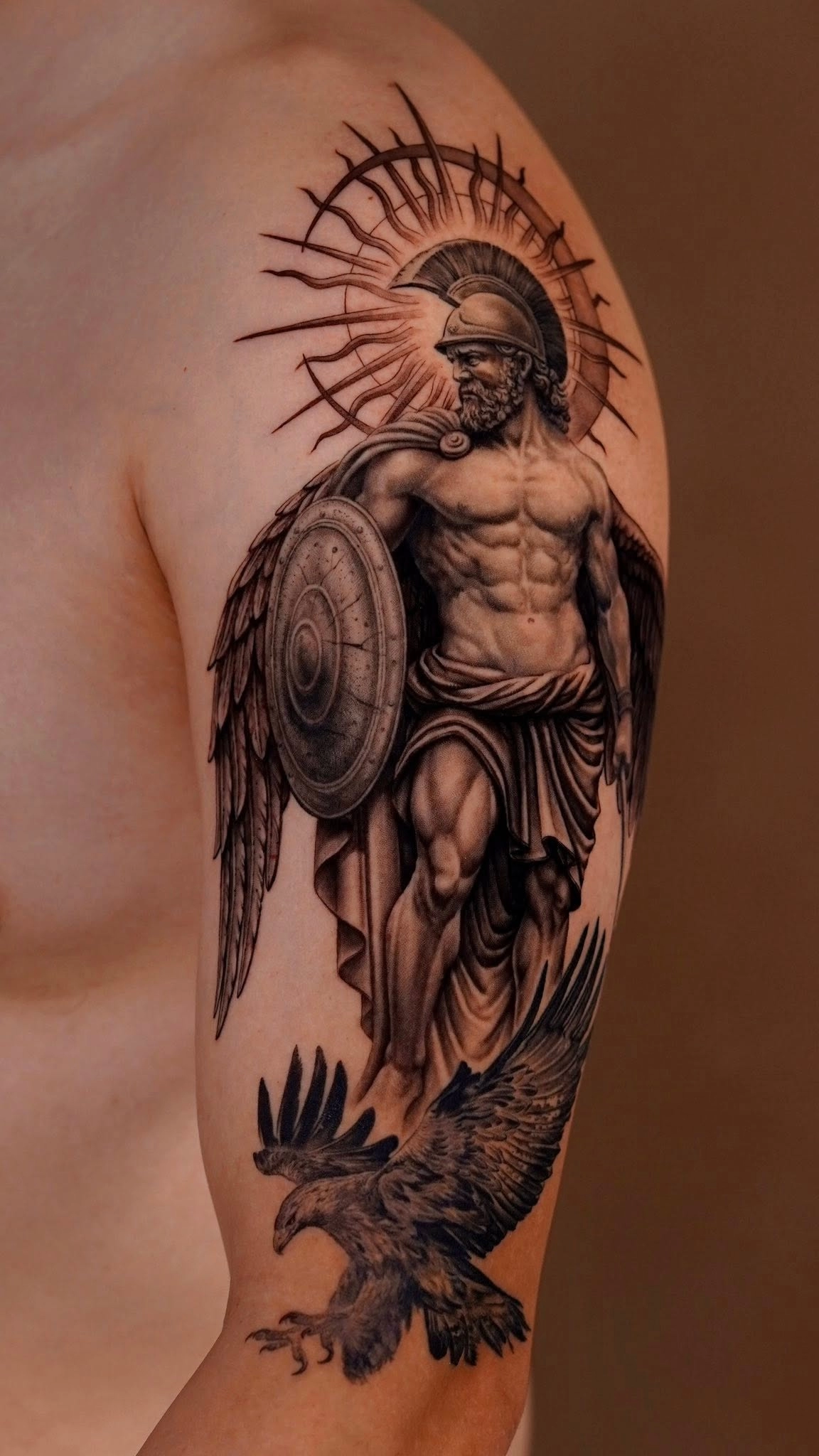
The Ultimate Guide to Realism Tattoos (2026) - Conclusion — Beyond Technique - Why a Great Realism Tattoo Is More Than a Perfect Copy



Conclusion
Beyond Technique
Why a Great Realism Tattoo Is More Than a Perfect Copy
If you've reached the end of this guide, you've probably realised something important:
A realism tattoo isn't defined by how accurately it copies a photograph.
It's defined by how convincingly it translates reality onto living skin.
Throughout this guide, we've explored the history of realism, the science behind visual perception, the unique properties of skin, the importance of contrast, composition, healing, and the decisions that separate an average tattoo from one that continues to impress years later.
While these topics may seem different at first, they all point toward the same conclusion:
Great realism is never created by accident.
Every successful realism tattoo is the result of hundreds of thoughtful decisions.
The choice of reference.
The placement on the body.
The balance between light and shadow.
The amount of detail.
The areas intentionally left untouched.
The way the composition guides the eye.
Even the healing process is considered before the first drop of ink touches the skin.
This is why realism remains one of the most challenging disciplines in tattooing.
It requires far more than technical ability.
It demands observation.
Patience.
Artistic judgement.
And perhaps most importantly, the willingness to simplify instead of adding more.
A Photograph Captures a Moment
A Tattoo Carries It Forward
Photographs freeze time.
Tattoos continue living.
They stretch as we move.
They change as our skin changes.
They accompany us through different stages of life.
A photograph is viewed on paper or a screen.
A tattoo becomes part of someone's identity.
That is why copying a photograph should never be the ultimate goal.
The real objective is preserving the feeling behind that photograph.
Whether it's a portrait of someone you love, the face of a favourite animal, a meaningful landscape, or a cinematic scene that shaped your life, the tattoo should communicate more than visual accuracy.
It should communicate emotion.
Years from now, people may not notice every individual hair, wrinkle, or texture.
What they'll notice is whether the artwork still feels alive.
Great Tattoos Are Designed for the Future
One of the recurring themes throughout this guide has been longevity.
Professional realism artists don't design tattoos only for the day they're completed.
They design for the years that follow.
That philosophy influences every stage of the process:
-
selecting references;
-
simplifying unnecessary details;
-
preserving strong contrast;
-
respecting the body's anatomy;
-
planning for natural healing;
-
creating compositions that remain readable over time.
In other words, a realism tattoo should age with you—not against you.
The goal isn't to stop change.
The goal is to ensure that change enhances rather than diminishes the artwork.
Choosing an Artist Is Choosing a Creative Partner
Perhaps the most valuable lesson in this guide has nothing to do with needles or ink.
It's about trust.
A meaningful realism tattoo is rarely created through a simple transaction.
It's built through collaboration.
The strongest projects begin with honest conversations.
Why this subject?
Why this placement?
What emotion should it carry?
How should it fit future tattoos?
These questions matter because no two people wear a tattoo in exactly the same way.
A custom design should reflect the individual wearing it—not simply the image they brought to the consultation.
Learning Before Tattooing Is Always Worth It
Whether this is your first tattoo or your tenth, taking the time to understand the process is one of the best investments you can make.
Knowing why contrast matters.
Understanding how skin heals.
Recognising the value of healed portfolios.
Choosing placement with intention.
These decisions often have a greater influence on the final result than chasing the latest trend or the highest-resolution reference photo.
An informed client is able to ask better questions.
Better questions lead to better conversations.
Better conversations often lead to better tattoos.
The Philosophy Behind This Guide
This guide was created with one purpose:
To help people make informed decisions based on knowledge rather than marketing.
The tattoo industry has changed dramatically over the past decade.
Social media has made incredible artwork more accessible than ever before.
At the same time, it has also encouraged unrealistic expectations by celebrating fresh tattoos while rarely showing how they heal.
Education helps bridge that gap.
By understanding not only what makes a realism tattoo beautiful, but why it works, collectors can approach the entire experience with greater confidence and clearer expectations.
Your Tattoo Is a Story Worth Designing Well
Realism is ultimately about observation.
Not only observing light and shadow, but observing people.
Their memories.
Their passions.
Their milestones.
Their stories.
The best realism tattoos aren't remembered because they reproduced a photograph perfectly.
They're remembered because they captured something that mattered.
That is the difference between technical skill and meaningful craftsmanship.
Continue Exploring
If you'd like to learn more before starting your project, we recommend exploring these in-depth guides:
Tattoo Styles
-
Black & Grey Realism Tattoo
-
Color Realism Tattoo
-
Portrait Tattoos
-
Micro Realism Tattoos
Planning Your Tattoo
-
Tattoo Placement Guide
-
Tattoo Consultation Guide
-
Tattoo Pain Chart
-
Tattoo Pricing Guide
Tattoo Care
-
Tattoo Healing Guide
-
Tattoo Aftercare Guide
Together, these resources form the Silver Ant Knowledge Project—a growing collection of educational guides created to help collectors make confident, well-informed decisions at every stage of their tattoo journey.
Ready to Plan Your Realism Tattoo?
Whether you're refining an existing idea or starting with nothing more than a meaningful story, the design process should begin with a conversation—not a commitment.
Bring your inspiration, your questions, and your goals.
A professional consultation isn't about convincing you to get tattooed.
It's about exploring what's possible, understanding the limitations, and creating a design that is uniquely yours.
Because the best realism tattoos don't begin with ink.
They begin with understanding.