The Ultimate Guide to Realism Tattoos (2026) - Chapter 6 — Black & Grey vs Color Realism Which Style Is Right for You?



The Ultimate Guide to Realism Tattoos (2026)
Chapter 6
Black & Grey vs Color Realism
Which Style Is Right for You?
Quick Answer
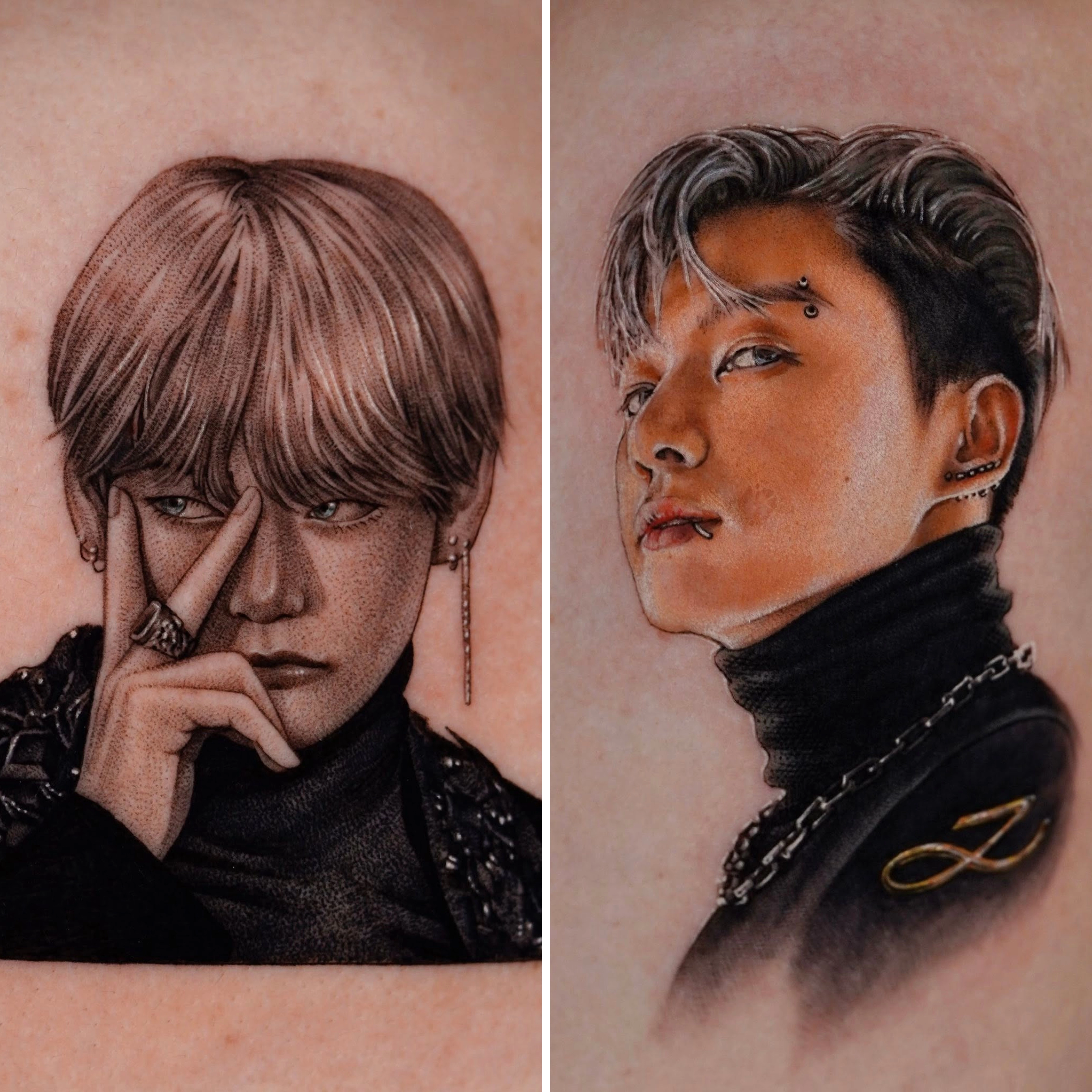
Neither Black & Grey Realism nor Color Realism is inherently better. Each style has unique strengths, technical challenges, and long-term characteristics. The right choice depends on your subject matter, skin tone, personal aesthetic, lifestyle, and expectations for how the tattoo will age.
Black & Grey realism is often chosen for its timeless appearance, dramatic contrast, and versatility. Color realism excels at capturing vibrant subjects, emotional atmosphere, and lifelike colour relationships that cannot be recreated using black ink alone.
The Wrong Question
One of the most common questions clients ask is:
"Which one looks better?"
Professional artists usually ask a different question:
"What story are you trying to tell?"
Choosing between black & grey and colour should never be based solely on trends.
Instead, consider:
-
the subject you're tattooing;
-
where the tattoo will be placed;
-
your natural skin tone;
-
your long-term aesthetic preferences;
-
how much visual impact you want from a distance.
The style should support the artwork—not define it.
Artist Insight
"We never recommend black & grey or colour simply because one is more popular. We recommend the approach that communicates the subject most effectively while giving it the best chance to age beautifully."
— Silver Ant Tattoo
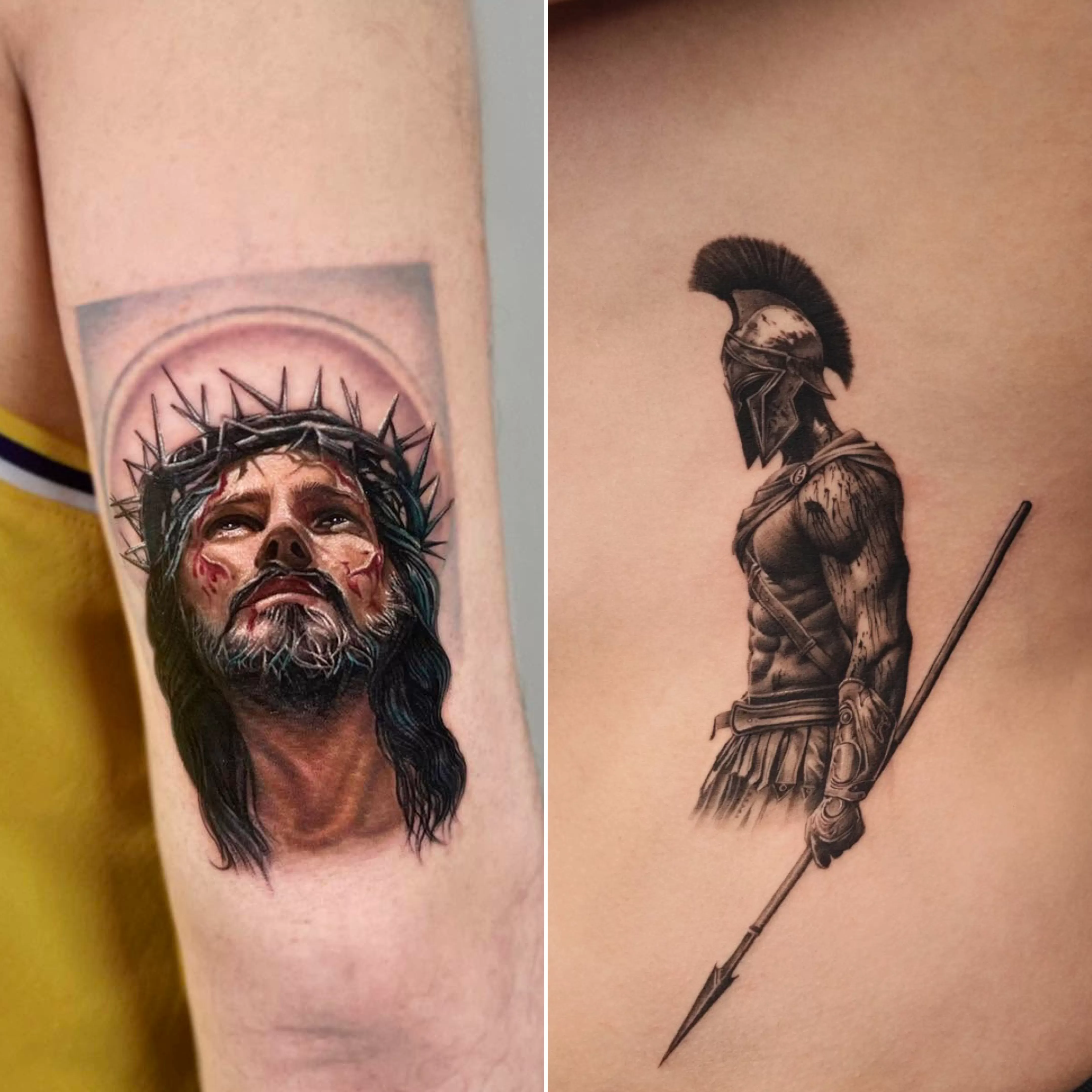
Black & Grey Realism
Black & Grey realism creates depth almost entirely through tonal values.
Without colour to attract attention, the artist must rely on:
-
contrast;
-
smooth shading;
-
composition;
-
edge control;
-
negative space.
This often produces a timeless, elegant appearance that works particularly well for:
-
portraits;
-
sculptures;
-
religious imagery;
-
wildlife;
-
historical figures;
-
architectural subjects.
Because the viewer focuses on light and shadow, black & grey realism often feels dramatic without appearing visually overwhelming.
Advantages of Black & Grey Realism
✔ Timeless aesthetic
✔ Strong emphasis on depth and form
✔ Excellent for portraits and dramatic lighting
✔ Works well across a wide range of skin tones
✔ Easier to integrate into future sleeves or larger compositions
Considerations
Black & Grey realism still requires careful planning.
Weak values cannot be hidden simply because colour is absent.
Great monochrome realism depends entirely on composition, tonal structure, and artistic discipline.
Learn more in our dedicated Black & Grey Realism Tattoo Guide (/tattoo-styles/black-grey-realism-tattoo).
Color Realism
Color realism introduces an entirely new layer of complexity.
Artists must consider not only light and shadow, but also:
-
colour temperature;
-
saturation;
-
harmony;
-
pigment behaviour;
-
and how colours interact with the client's natural skin tone.
When executed well, colour realism can produce extraordinary visual richness.
Flowers appear vibrant.
Animals feel alive.
Sunsets glow.
Fantasy artwork becomes immersive.
Rather than replacing value, colour builds upon it.
The strongest colour realism tattoos are still founded on excellent contrast and composition.
Advantages of Color Realism
✔ Exceptional visual impact
✔ Greater emotional range
✔ Ideal for flowers, wildlife, fantasy, food, landscapes, and cinematic scenes
✔ Allows realistic reproduction of natural colour relationships
✔ Creates vibrant focal points within larger compositions
Considerations
Colour realism generally demands even greater planning than black & grey realism.
Different pigments heal differently.
Skin tone influences colour perception.
Some colours naturally appear more subtle than others after healing.
For this reason, professional artists rarely copy colours directly from a photograph.
Instead, they adjust the palette to suit both the subject and the individual wearing the tattoo.
Our Color Realism Tattoo Guide (/tattoo-styles/color-realism-tattoo) explores pigment selection, colour theory, and long-term maintenance in greater depth.
Scientific Note
Colour perception depends on both the pigment itself and the skin through which it is viewed. Lighting conditions, melanin levels, and surrounding colours all influence how a tattoo appears in everyday life.
Further Reading
-
National Eye Institute — https://www.nei.nih.gov
-
American Academy of Dermatology — https://www.aad.org
Which Style Ages Better?
This question appears in almost every consultation.
The answer is more nuanced than many people expect.
A well-designed black & grey tattoo often maintains exceptionally strong readability because it relies primarily on value contrast.
A well-designed colour tattoo can also age beautifully—but only when the artist understands colour harmony, appropriate saturation, and long-term skin behaviour.
Neither style is automatically superior.
Poor design ages poorly regardless of colour.
Strong design remains compelling regardless of colour.
The quality of the artist matters far more than the choice between monochrome and colour.
If you're curious about the factors that influence longevity, our Tattoo Healing Guide (/tattoo-guides/tattoo-healing) and Tattoo Aftercare Guide (/tattoo-guides/tattoo-aftercare) explain how daily care affects tattoos over time.
Choosing Based on Subject Matter
Although every project is unique, some subjects naturally suit one approach more than the other.
Black & Grey Often Excels With:
-
Portraits
-
Classical sculptures
-
Religious imagery
-
Wolves, lions, and large predators
-
Architectural subjects
-
Chiaroscuro-inspired compositions
Color Often Excels With:
-
Flowers
-
Birds
-
Tropical wildlife
-
Marine life
-
Fantasy artwork
-
Botanical illustrations
-
Landscapes at sunrise or sunset
These are not strict rules.
Exceptional artists can successfully reinterpret almost any subject in either style.
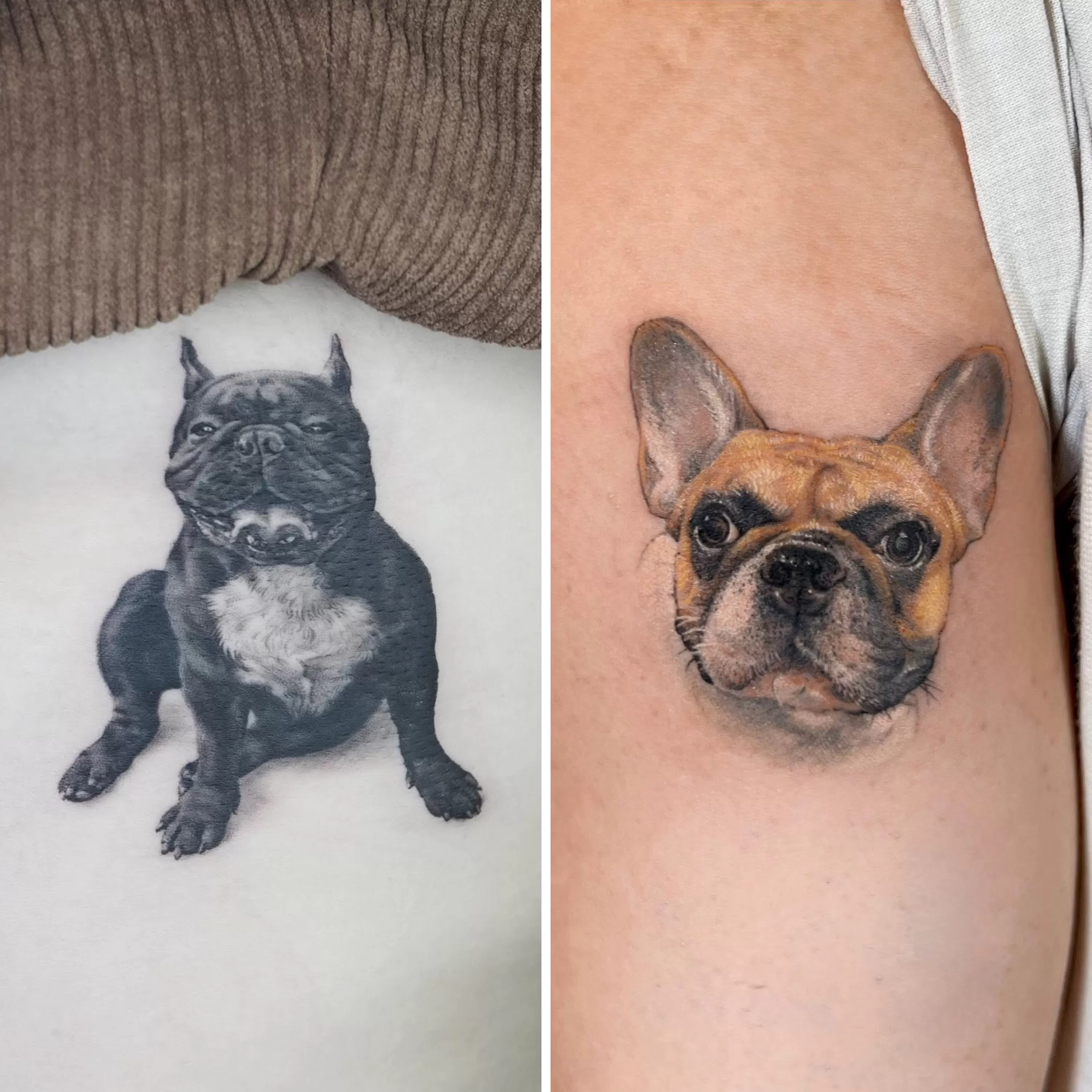
Common Mistake
"Colour tattoos are always brighter, so they must be better."
Brightness alone does not create realism.
Without thoughtful composition and strong values, even the most vibrant colours cannot produce convincing depth.
Likewise, a black & grey tattoo with exceptional lighting often creates a stronger illusion of realism than a colourful tattoo with weak structure.
Artist Note
During consultations at Silver Ant Tattoo, we rarely begin by asking clients whether they want colour or black & grey.
Instead, we discuss the story they want the tattoo to tell, how it will fit the body, and how it may evolve as future pieces are added.
Only then do we decide which approach best serves the project.
Key Takeaways
✔ Black & Grey and Color Realism are built on the same artistic foundations.
✔ Contrast and composition matter more than colour alone.
✔ Skin tone should always influence colour selection.
✔ Subject matter often helps determine the most suitable style.
✔ Great design ages well regardless of whether it uses colour.
Continue Exploring
To continue learning about realism tattoo design, read:
-
Black & Grey Realism Tattoo Guide →
/tattoo-styles/black-grey-realism-tattoo -
Color Realism Tattoo Guide →
/tattoo-styles/color-realism-tattoo -
Portrait Tattoo Guide →
/tattoo-styles/portrait-tattoo -
Tattoo Healing Guide →
/tattoo-guides/tattoo-healing -
Tattoo Aftercare Guide →
/tattoo-guides/tattoo-aftercare
References & Further Reading
Colour & Vision
-
National Eye Institute — https://www.nei.nih.gov
Skin & Healing
-
American Academy of Dermatology — https://www.aad.org
-
National Library of Medicine (PubMed) — https://pubmed.ncbi.nlm.nih.gov
Next Chapter
Chapter 7 — Designing a Realism Tattoo: From Reference Photo to Finished Composition