The Ultimate Guide to Realism Tattoos (2026) - Chapter 4 — Why Skin Is Not Paper - Understanding the Living Canvas Behind Every Great Realism Tattoo



The Ultimate Guide to Realism Tattoos (2026)
Chapter 4
Why Skin Is Not Paper
Understanding the Living Canvas Behind Every Great Realism Tattoo
Quick Answer
A realism tattoo is created on living skin, not on paper, canvas, or a digital screen. Skin stretches, heals, ages, changes colour, and reacts differently depending on the body area and the individual. These biological characteristics influence every artistic decision—from composition and contrast to detail density and placement.
Understanding skin is one of the defining differences between an artist who can copy a photograph and one who can create a realism tattoo that still looks exceptional years later.
The Canvas Never Stops Changing
Painters enjoy one luxury tattoo artists never have.
Their canvas stays exactly where they left it.
Human skin is constantly changing.
It expands and contracts as muscles move. It is exposed to sunlight, friction, hydration changes, weight fluctuations, and the natural ageing process. Even two neighbouring areas of the same body can behave differently over time.
This means a realism tattoo is never designed only for today.
It is designed for how the skin will carry that artwork over the next five, ten, or even twenty years.
The best realism artists are always thinking ahead.
Artist Insight
"When we design a realism tattoo, we're not asking how it will look tonight. We're asking how it will look after thousands of showers, summers, workouts, and years of natural ageing. That's the difference between creating a tattoo and creating a lasting piece of art."
— Silver Ant Tattoo
Why Tattoo Ink Doesn't Stay Exactly Where It's Placed
Many first-time clients imagine tattoo ink sitting perfectly still beneath the skin forever.
Reality is more complex.
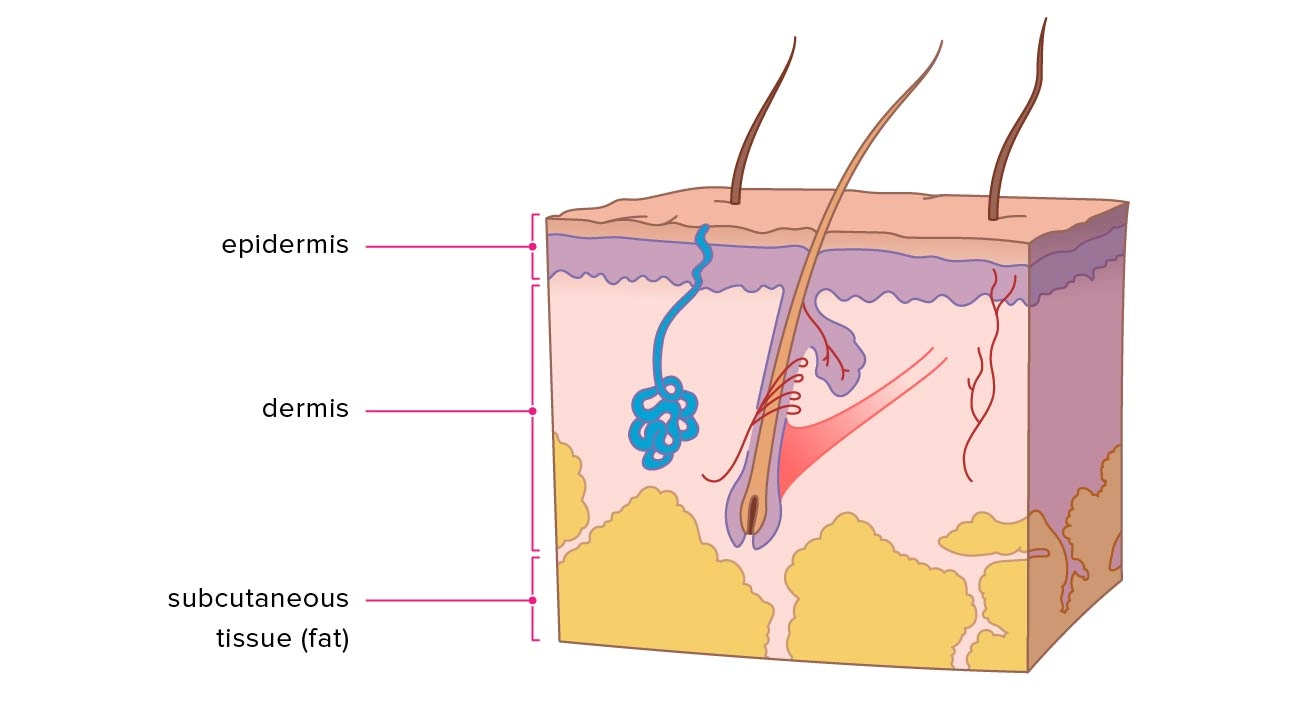
During the tattooing process, pigment is placed into the dermis, where it becomes encapsulated as the skin heals. Over time, the tattoo remains remarkably stable, but it is never completely static.
Tiny changes occur naturally as part of the body's biology.
This is one reason experienced artists avoid placing excessive amounts of microscopic detail too close together.
Designing for longevity means allowing the artwork room to breathe.
If you're interested in how tattoos evolve after your appointment, our Tattoo Healing Guide (/tattoo-guides/tattoo-healing) explains each stage of the healing process, while our Tattoo Aftercare Guide (/tattoo-guides/tattoo-aftercare) covers the habits that help preserve detail over time.
Scientific Note
Tattoo pigment is retained primarily within the dermis, while the epidermis continuously renews itself. This biological distinction explains why tattoos remain visible even though the outer layer of skin is constantly replaced.
Further Reading
-
American Academy of Dermatology — https://www.aad.org
-
National Library of Medicine (PubMed) — https://pubmed.ncbi.nlm.nih.gov
Body Placement Changes Everything
A realism tattoo doesn't exist in isolation.
It exists on a moving body.
The shoulder rotates.
The forearm twists.
The chest expands with every breath.
The ribs flex.
The calf contracts as you walk.
Because of this, experienced artists don't simply resize a design to fit a space.
They redesign it to work with the body's natural movement.
A wolf portrait that works beautifully on the outer forearm may lose its impact if copied directly onto the ribs. Likewise, a circular composition that feels balanced on the shoulder may appear distorted on the thigh.
Choosing the right placement is not only about pain or visibility.
It is about preserving the visual integrity of the artwork.
For a detailed comparison of body locations, read our Tattoo Placement Guide (/tattoo-guides/tattoo-placement-guide).
Skin Tone Influences Every Colour Decision
No tattoo is viewed against a white background.
Every tattoo is viewed through the natural tone of the client's skin.
This becomes especially important in Color Realism Tattoos, where subtle colour transitions can be influenced by warm, cool, light, or deep skin tones.
Professional artists do not simply choose colours based on the reference photograph.
They choose colours based on how those pigments will appear through your skin.
This is one reason custom colour palettes often outperform direct colour matching.
Learn more in our Color Realism Tattoo Guide (/tattoo-styles/color-realism-tattoo), where we discuss pigment selection, saturation, and long-term colour retention.
The Importance of Negative Space
Many clients focus on what should be tattooed.
Experienced artists spend equal time deciding what should remain untouched.
These untouched areas—known as negative space—allow the eye to separate forms, recognise depth, and appreciate contrast.
Without breathing room, realism quickly becomes visually crowded.
Negative space is not empty.
It is an active design element.
When used correctly, it makes the surrounding details appear stronger.
Common Mistake
"If there's empty skin, the tattoo isn't finished."
In reality, strategic negative space often makes a realism tattoo more readable and more durable.
Overfilling every available area usually reduces visual impact instead of increasing it.
Artist Note
At Silver Ant Tattoo, we rarely evaluate a realism design by zooming in on individual details.
Instead, we step back several times during the design process.
If the subject remains instantly recognisable from across the room, the composition is working.
If it only looks impressive at close range, we continue refining the design before tattooing begins.
Key Takeaways
✔ Skin is a living, changing canvas—not a fixed surface.
✔ Great realism tattoos are designed with long-term ageing in mind.
✔ Placement affects both composition and longevity.
✔ Skin tone influences colour selection and perceived contrast.
✔ Negative space is an essential design tool, not wasted space.
Continue Exploring
Deepen your understanding with these related guides:
-
Tattoo Placement Guide →
/tattoo-guides/tattoo-placement-guide -
Tattoo Healing Guide →
/tattoo-guides/tattoo-healing -
Tattoo Aftercare Guide →
/tattoo-guides/tattoo-aftercare -
Color Realism Tattoo →
/tattoo-styles/color-realism-tattoo -
Black & Grey Realism Tattoo →
/tattoo-styles/black-grey-realism-tattoo
References & Further Reading
Skin & Healing
-
American Academy of Dermatology — https://www.aad.org
-
National Library of Medicine (PubMed) — https://pubmed.ncbi.nlm.nih.gov
Human Anatomy
-
Cleveland Clinic — https://my.clevelandclinic.org
-
MedlinePlus — https://medlineplus.gov
Next Chapter
Chapter 5 — The Science of Contrast: Why Some Realism Tattoos Stay Sharp While Others Turn Muddy