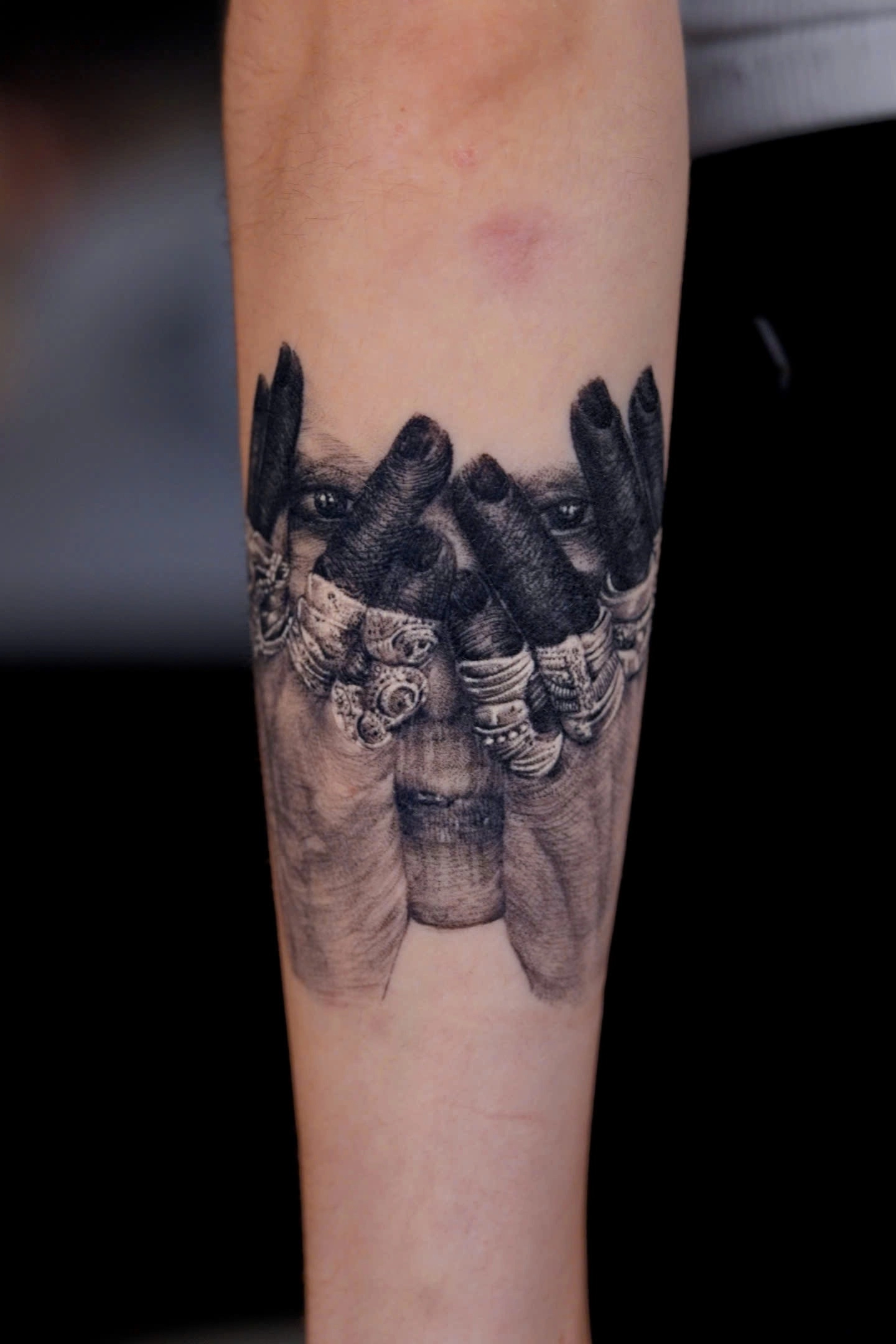
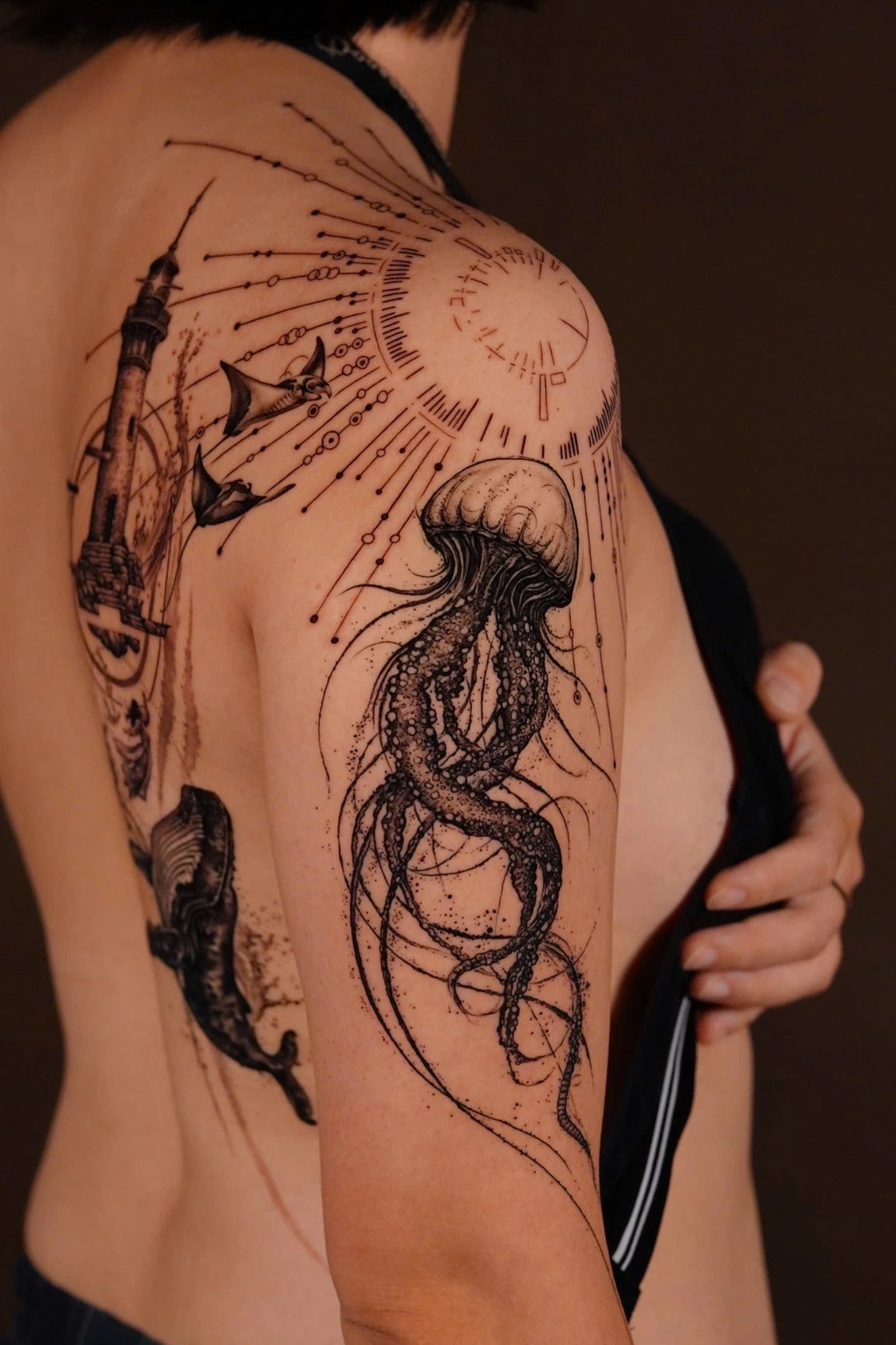
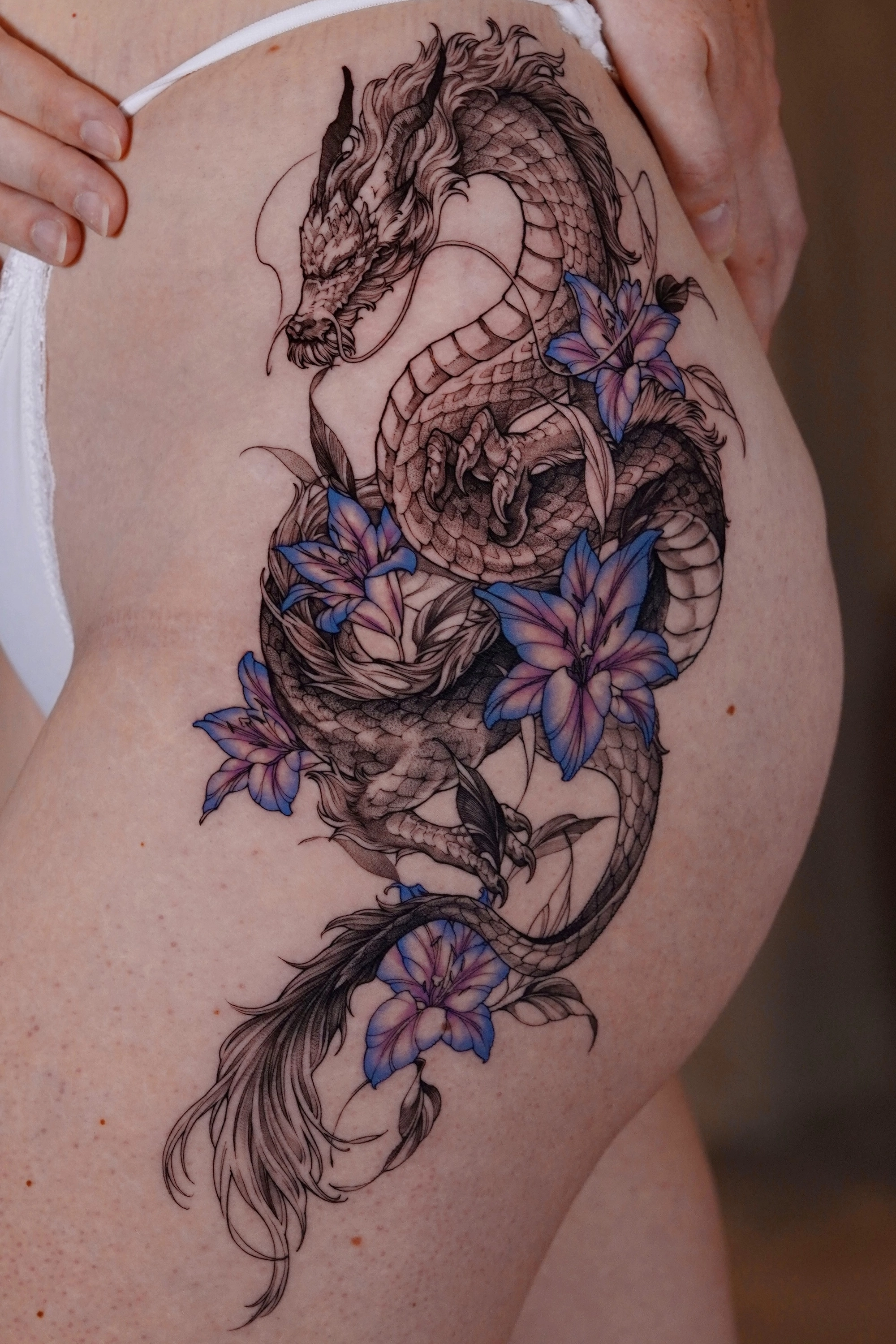
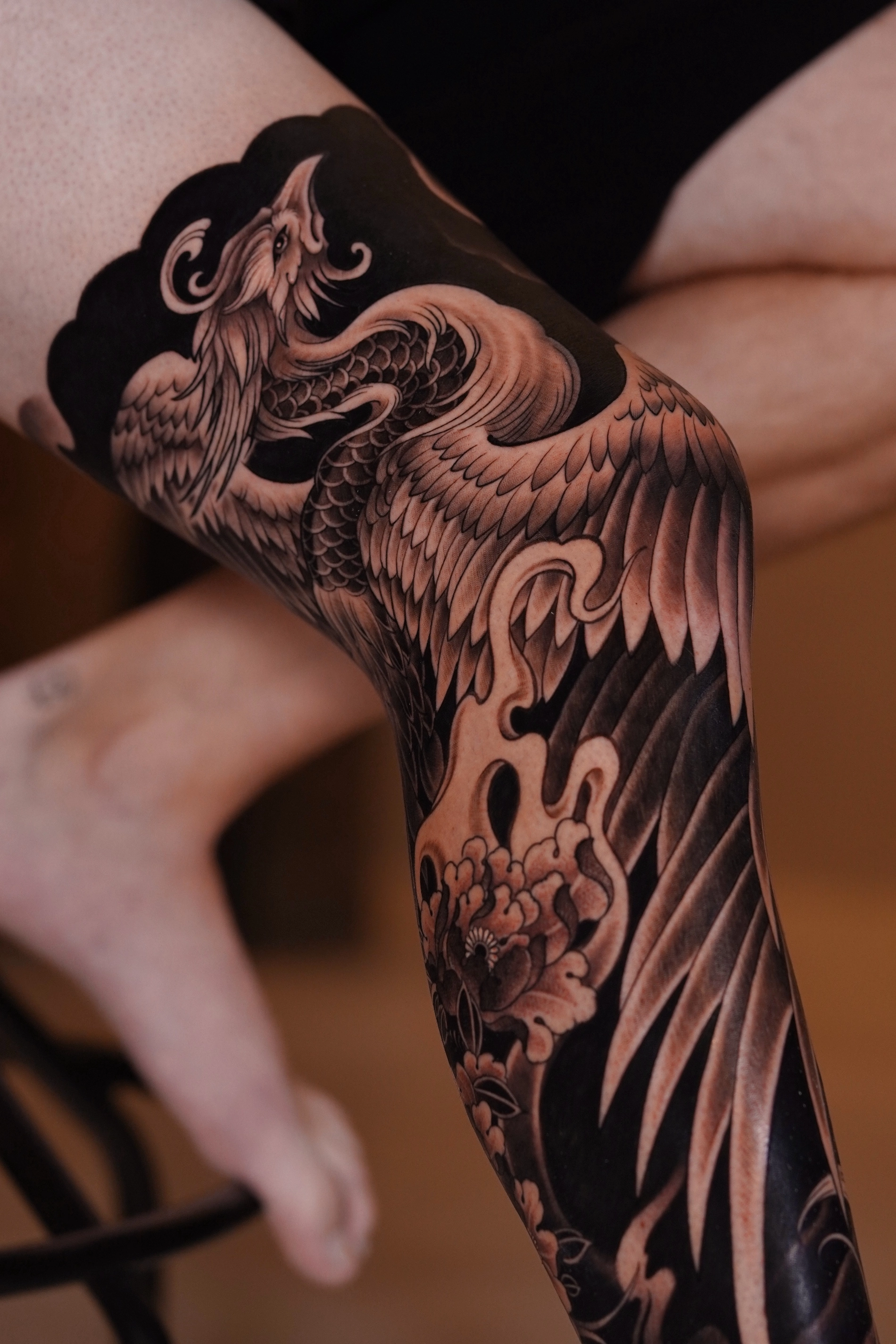
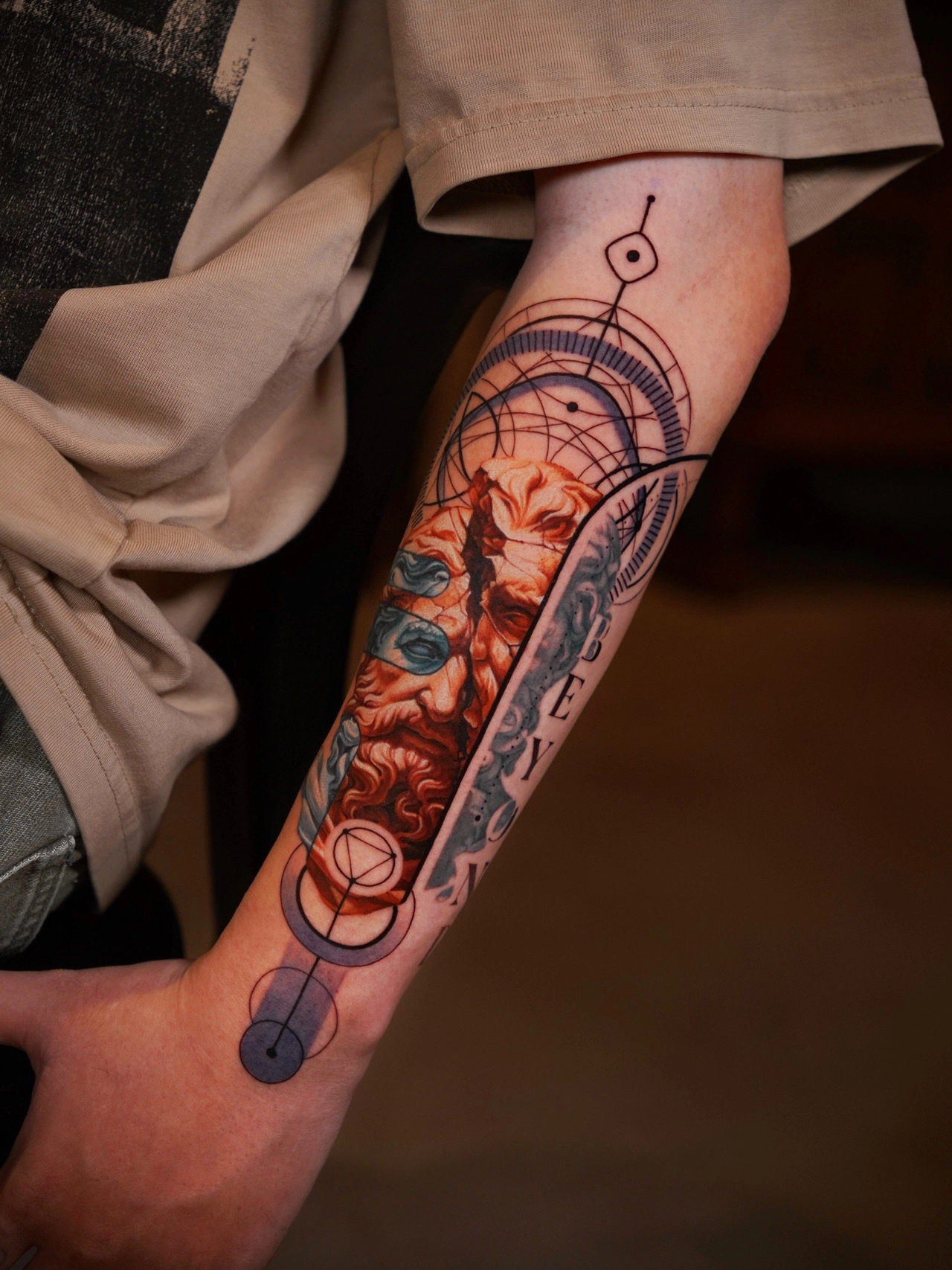
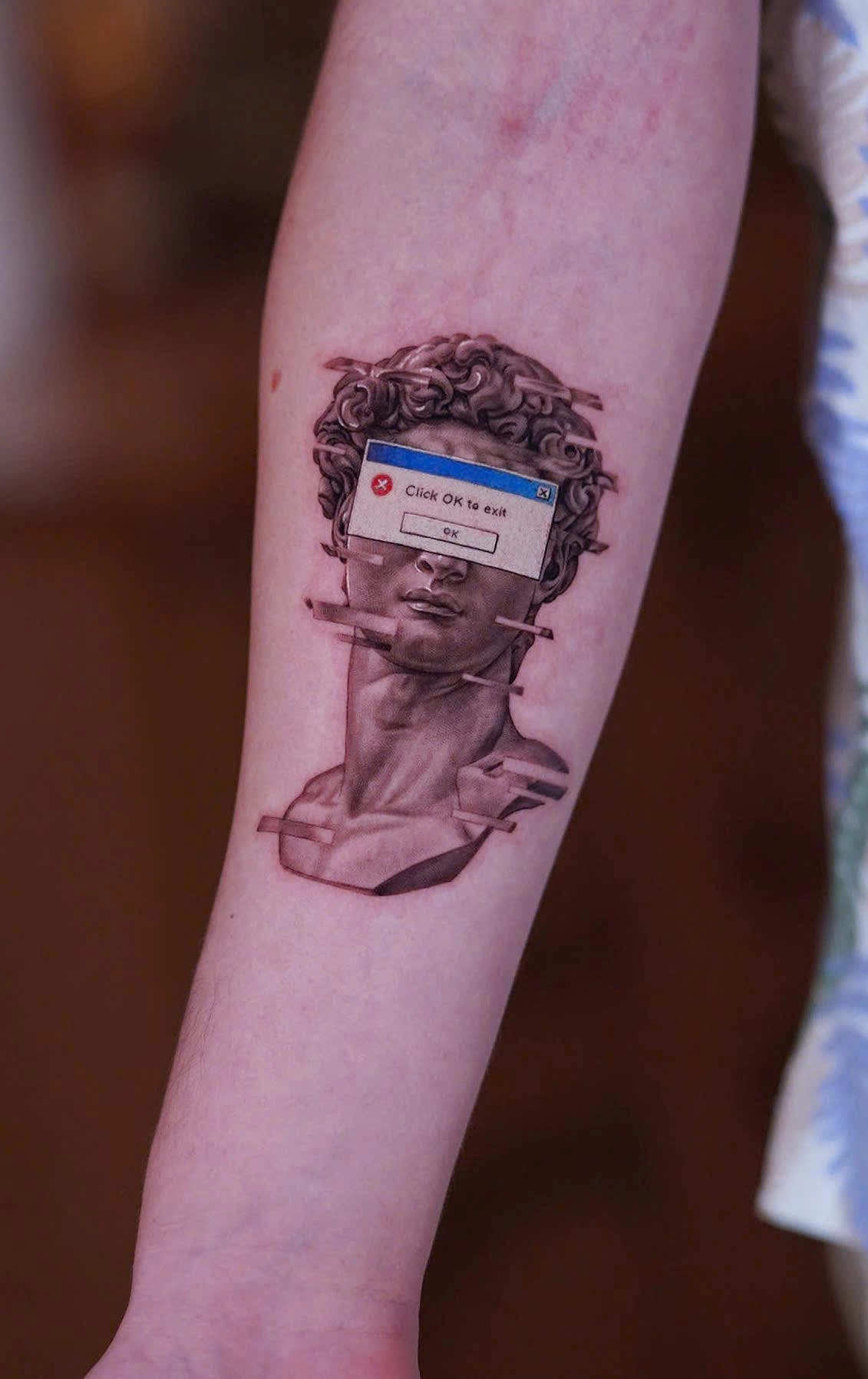
Image
01/07/2026 | by Silver Ant Tattoo

The Ultimate Guide to Realism Tattoos (2026) - Chapter 3 — How the Human Eye Sees Realism

The Ultimate Guide to Realism Tattoos (2026)

Chapter 3

How the Human Eye Sees Realism

Why Great Tattoos Feel Real Before You Notice the Details


Quick Answer

The human eye does not experience realism by examining every tiny detail. Instead, the brain first recognises contrast, overall shape, lighting, depth, and familiar patterns before processing finer textures.

This is why successful realism tattoos depend less on microscopic detail and more on strong artistic fundamentals. A technically simple tattoo with excellent composition often appears more realistic than an overly detailed tattoo with weak visual structure.


Your Brain Doesn't See Like a Camera

One of the biggest misconceptions about realism tattooing is the belief that the human eye works like a high-resolution camera.

It doesn't.

A camera records everything equally.

Your brain does not.

Instead, it constantly filters visual information, deciding what deserves attention and what can safely be ignored.

Every second, your eyes capture an enormous amount of visual data. Rather than analysing every detail, your brain quickly organises that information into patterns, allowing you to recognise people, animals, objects, and environments almost instantly.

For realism tattoo artists, understanding this process is invaluable.

A tattoo is convincing not because it contains every detail, but because it presents the right details in the right places.


Artist Insight

"Clients often ask us to add more detail. In reality, our job is usually deciding where detail will have the greatest impact—and where it will simply compete with the focal point."

— Silver Ant Tattoo
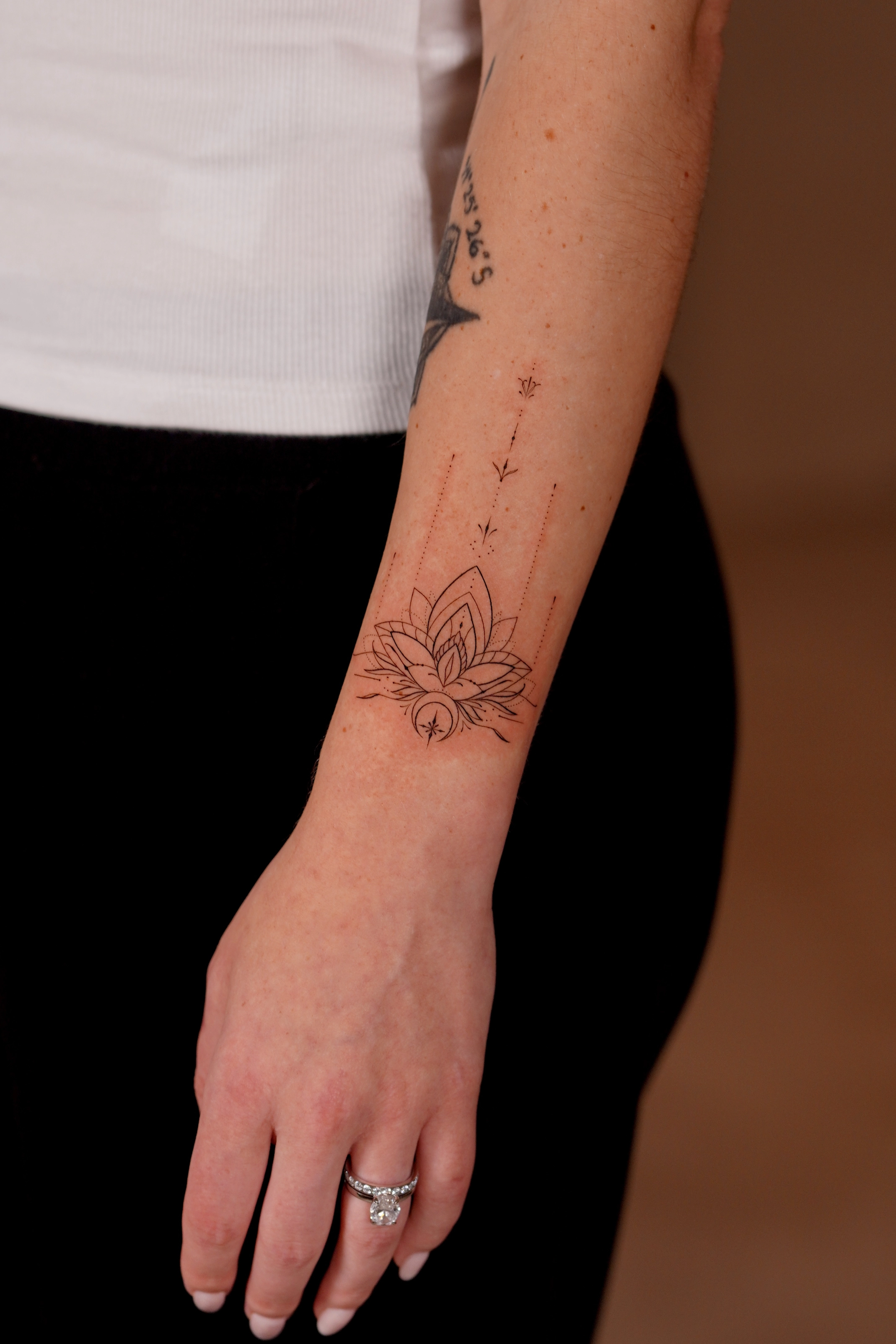

The Hierarchy of Vision

Professional realism artists rarely think in terms of "adding details."

Instead, they think in terms of visual hierarchy.

Visual hierarchy describes the order in which the viewer experiences an image.

In most realism tattoos, the brain notices:

  1. Overall silhouette

  2. Direction of light

  3. Contrast

  4. Facial expression or subject

  5. Texture

  6. Fine details

This sequence happens in fractions of a second.

If the first three elements are weak, the remaining details cannot save the tattoo.

Imagine looking at a lion portrait from across the room.

You probably cannot count individual hairs in its mane.

Yet you immediately recognise:

  • the lion;

  • its expression;

  • the direction of light;

  • and its powerful presence.

That emotional impact comes from composition and value structure—not individual strands of fur.


Why Portrait Tattoos Are So Difficult

Portrait tattoos represent one of the greatest technical challenges in tattooing because the human brain is exceptionally sensitive to faces.

People instinctively notice when something feels "wrong," even if they cannot explain why.

A portrait may contain thousands of perfectly tattooed details, but if the eyes sit slightly too high or the jawline is subtly distorted, the illusion immediately disappears.

For this reason, experienced realism artists spend significant time studying:

  • facial anatomy;

  • skull structure;

  • proportions;

  • muscle movement;

  • and natural lighting.

Creating a believable portrait requires far more than technical tattooing skill.

It requires understanding how people recognise people.

If you're considering a portrait tattoo, our Portrait Tattoo Guide (/tattoo-styles/portrait-tattoo) explores these principles in much greater detail, including reference selection, composition, and long-term readability.


Scientific Note

Research in cognitive neuroscience suggests that specialised regions of the brain are involved in facial recognition. Humans often detect subtle changes in facial proportion almost instantly, which helps explain why portrait tattoos are widely considered one of the most demanding tattoo disciplines.

Further Reading


Why Contrast Creates the Illusion of Depth

If realism tattooing had one universal language, it would be contrast.

Without contrast, every image becomes visually flat.

Contrast allows the brain to separate foreground from background, distinguish light from shadow, and perceive volume where none actually exists.

This is why experienced artists often increase contrast beyond what appears in the original photograph.

Not because the reference is wrong.

Because skin behaves differently from paper.

As tattoos heal, transitions naturally soften.

By planning stronger value separation from the beginning, artists help preserve depth for years to come.

This principle becomes even more important in Black & Grey Realism Tattoos, where depth is created almost entirely through tonal relationships rather than colour. Our Black & Grey Realism Tattoo Guide (/tattoo-styles/black-grey-realism-tattoo) explains how experienced artists build volume using only black ink and negative space.


Common Mistake

Many people judge realism by asking:

"How many details does it have?"

Professional artists ask a different question:

"Can I still understand this tattoo from three metres away?"

If the answer is yes, the composition is usually strong.

If the tattoo only looks impressive when viewed from a few centimetres away, it often lacks a clear visual hierarchy.


Artist Note

When designing large realism sleeves at Silver Ant Tattoo, we rarely begin by rendering textures.

Instead, we first establish:

  • the main focal point;

  • the direction of light;

  • the flow of the composition around the body's anatomy;

  • and the balance between positive and negative space.

Only after these foundations are established do we begin refining textures and smaller details.

This approach helps ensure the finished tattoo remains visually balanced from every viewing distance.


Key Takeaways

✔ The brain recognises contrast and overall structure before fine detail.

✔ Great realism tattoos are built around visual hierarchy.

✔ Portrait tattoos are challenging because humans instantly recognise facial inaccuracies.

✔ Contrast creates depth; details create texture.

✔ A tattoo should remain readable from both close up and a distance.


Continue Exploring

Continue your journey with:

  • Black & Grey Realism Tattoo/tattoo-styles/black-grey-realism-tattoo

  • Color Realism Tattoo/tattoo-styles/color-realism-tattoo

  • Portrait Tattoo Guide/tattoo-styles/portrait-tattoo

  • Tattoo Design Process/tattoo-guides/tattoo-design-process


References & Further Reading

Vision & Neuroscience

Art & Composition


Next Chapter

Chapter 4 — Why Skin Is Not Paper: The Living Canvas Every Realism Artist Must Understand