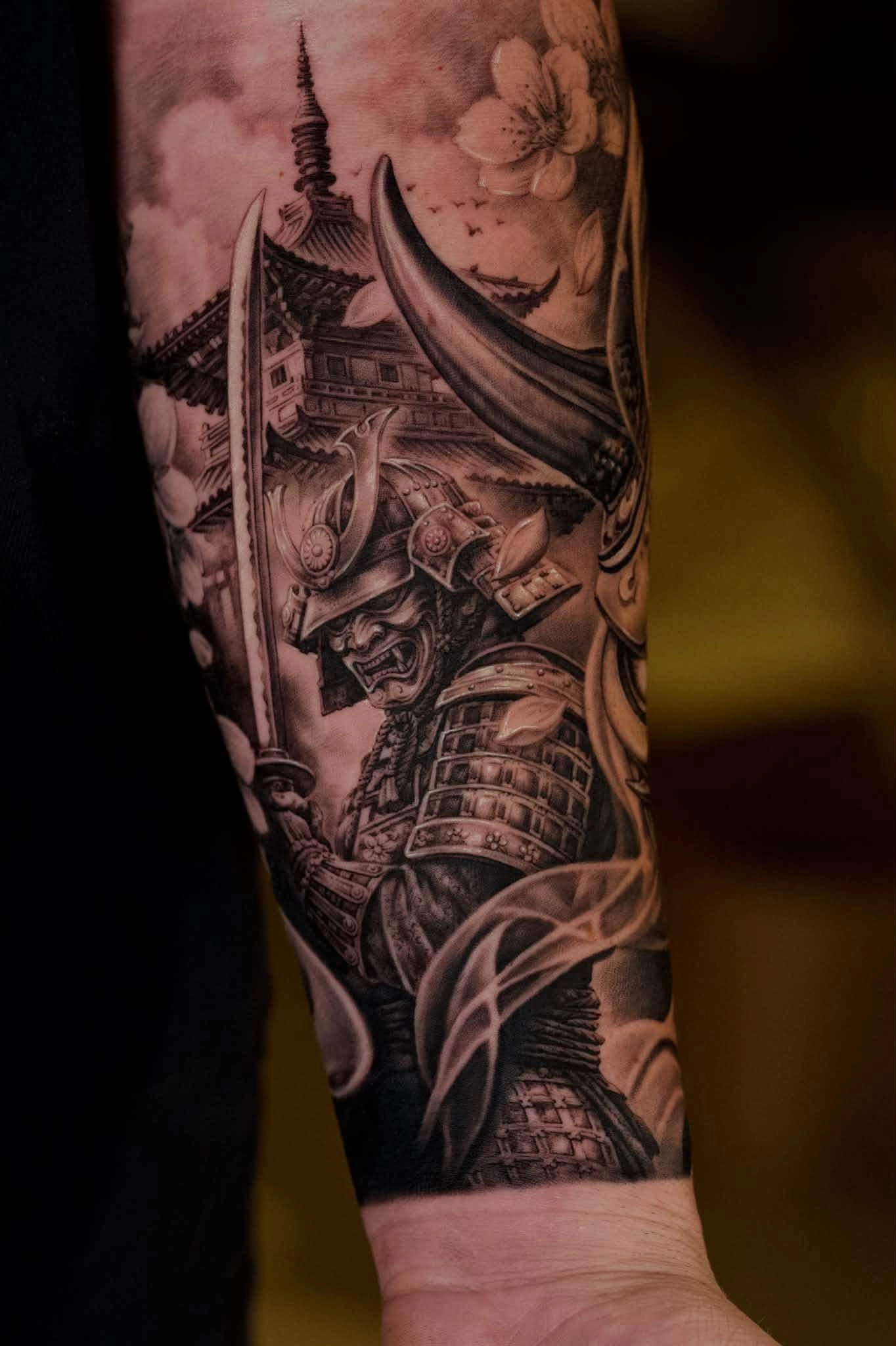
Black & Grey Realism: The Art of Detail — For Those Who Appreciate the Smallest Things



Black & Grey Realism: The Art of Detail — For Those Who Appreciate the Smallest Things
Black & Grey Realism: The Art of Detail
Some people are drawn to tattoos because of their bold shapes, striking colours or powerful compositions.
Others find beauty in the smallest things.
The subtle texture of skin. The individual strands of hair. The intricate patterns on a piece of armour. The delicate transition between light and shadow across a face. Details that might go unnoticed at first glance, yet become fascinating when you take a closer look.
For those who appreciate this level of precision, Black & Grey Realism is more than a tattoo style. It is an art form built around observation, patience and an appreciation for detail.
At Silver Ant Tattoo, we see realism as the process of translating the complexity of the real world onto skin, using black ink, shades of grey and carefully controlled contrast to create depth, texture and dimension.
1. When Every Detail Tells a Story
Realism is not simply about making an image look real. It is about understanding what makes it feel real.
Consider a portrait. Its likeness depends on much more than the general shape of the face. The reflection of light in the eyes, the subtle folds around the mouth, the texture of the skin and the shadows beneath the cheekbones all contribute to the final expression.
The same principle applies to animals, statues, architecture and other subjects.
A realistic animal portrait might rely on the direction of individual hairs, the depth of its fur and the reflections in its eyes. A historical figure might be defined by the weathered texture of their skin, the fine engraving on their armour or the folds of their clothing.
These elements may seem insignificant on their own. Together, they create the illusion of life.
This is what makes detailed Black & Grey Realism so compelling. The closer you look, the more there is to discover.
2. The Language of Light, Shadow and Texture
Without colour to carry the composition, Black & Grey Realism relies on a different visual language.
Light establishes form. Shadows create depth. Gradients connect surfaces, while contrast determines which details stand out and which quietly recede into the background.
A skilled realism artist must understand how these elements interact.
Too little contrast can make a tattoo appear flat. Too much can overwhelm delicate textures and erase subtle transitions. The challenge is finding the right balance between the two.
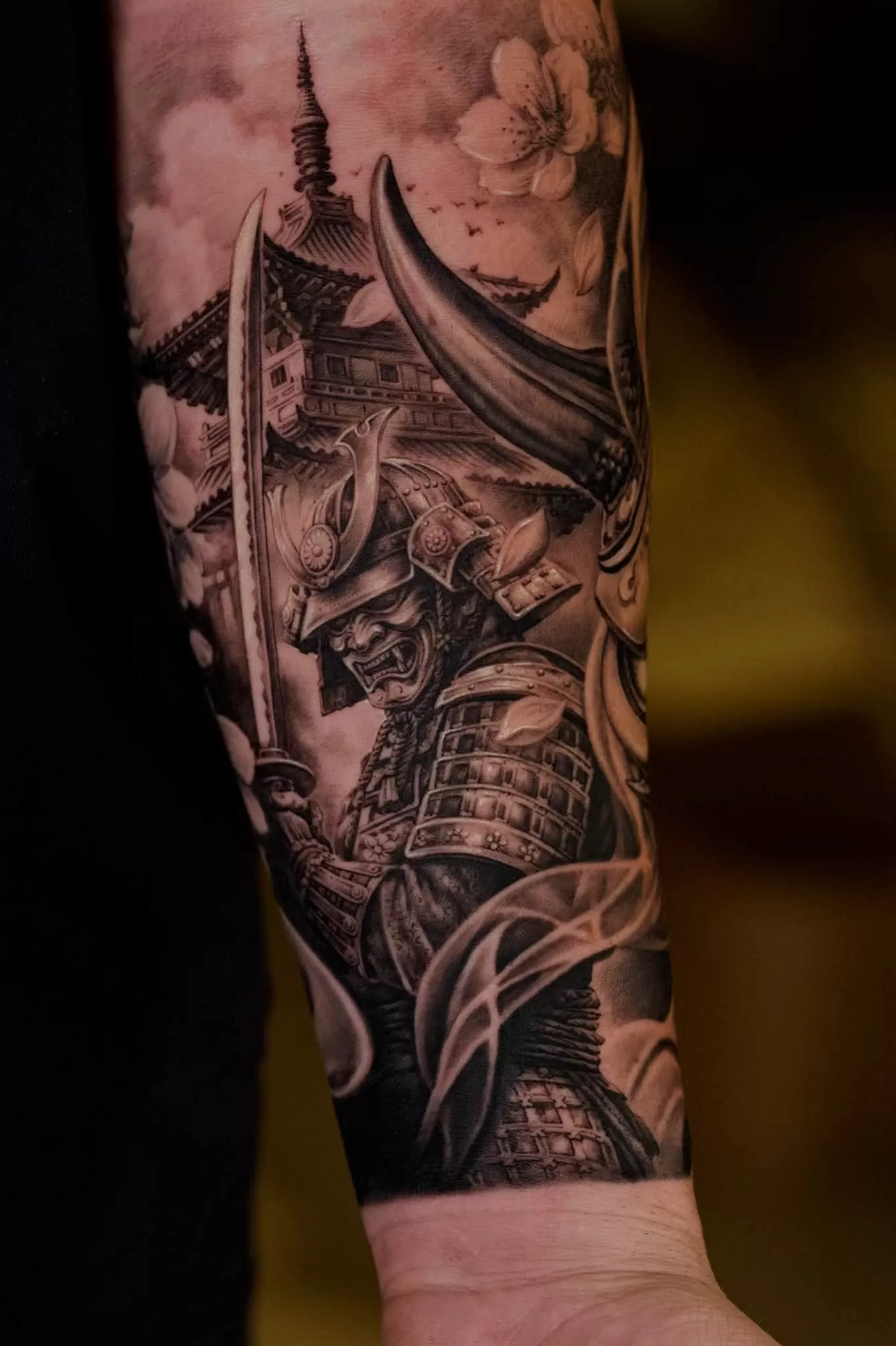
Texture is equally important. Smooth skin should not look like rough stone. Fabric should feel different from metal. Soft feathers require a different treatment from sharp scales or weathered wood.
Each surface has its own visual characteristics, and recreating them requires more than simply adding lines or shading darker areas.
The real skill lies in knowing exactly what to emphasise, what to soften and where to leave space for the image to breathe.
3. Micro Details vs. The Bigger Picture
One of the most interesting aspects of realism tattooing is the relationship between intricate details and the overall composition.
A small, carefully executed area might contain an extraordinary amount of information: tiny reflections, fine textures, delicate patterns or subtle variations in tone.
However, a tattoo is not a photograph displayed on a screen. It exists on a three-dimensional, living surface and must remain readable at different viewing distances.
This is why detail alone does not guarantee a successful realism tattoo.
A design needs a clear focal point, a coherent arrangement of light and shadow, and enough visual separation between its elements. Without these foundations, even beautifully rendered details can become difficult to distinguish.
For smaller or micro-realism tattoos, the artist must be especially selective. Some features need to be simplified, while the most important details receive greater attention.
For larger compositions, there is more room to develop multiple focal points, intricate textures and a richer sense of depth.
The goal is not to include every possible detail. It is to include the details that matter most.
4. Why Detail Must Survive the Healing Process
A freshly completed tattoo can look incredibly sharp. Fine textures appear crisp, gradients look smooth, and subtle contrasts stand out under studio lighting.
But the fresh tattoo is only the beginning.
As the skin heals, its appearance changes. Some tones become softer, extremely fine elements may become less distinct, and the relationship between light and dark can look different from what it did on the day of the session.
Over time, the skin and ink continue to age together.
This is particularly important in Black & Grey Realism, where the image depends heavily on tonal separation rather than bold outlines.
An experienced artist must therefore think beyond the immediate result.
How much space should separate two fine details? Will a subtle shadow remain distinguishable from the surrounding mid-tones? Does the design have enough contrast to preserve its structure as it ages?
These decisions influence the tattoo long before the first needle touches the skin.
At Silver Ant Tattoo, we believe that detail should not exist only for the photograph taken immediately after a session. It should be designed with the healed tattoo in mind.
That means balancing precision with readability, and artistic ambition with a realistic understanding of how tattoos evolve over time.
5. Choosing the Right Subject for a Detailed Realism Tattoo
Not every subject needs to be rendered in the same way. Some lend themselves naturally to intricate Black & Grey Realism, especially when their defining features become more interesting under close inspection.
Here are a few directions worth exploring.
Portraits and Human Figures
Facial expressions, skin texture, eyes and subtle anatomical details can give a portrait its individuality. The challenge is preserving the character of the subject without overloading the composition.
Animals and Wildlife
Fur, feathers, scales and reflective eyes offer opportunities to explore texture and contrast. The key is capturing the characteristics that make each animal recognisable, rather than treating every surface with the same technique.
Armour, Sculptures and Historical Imagery
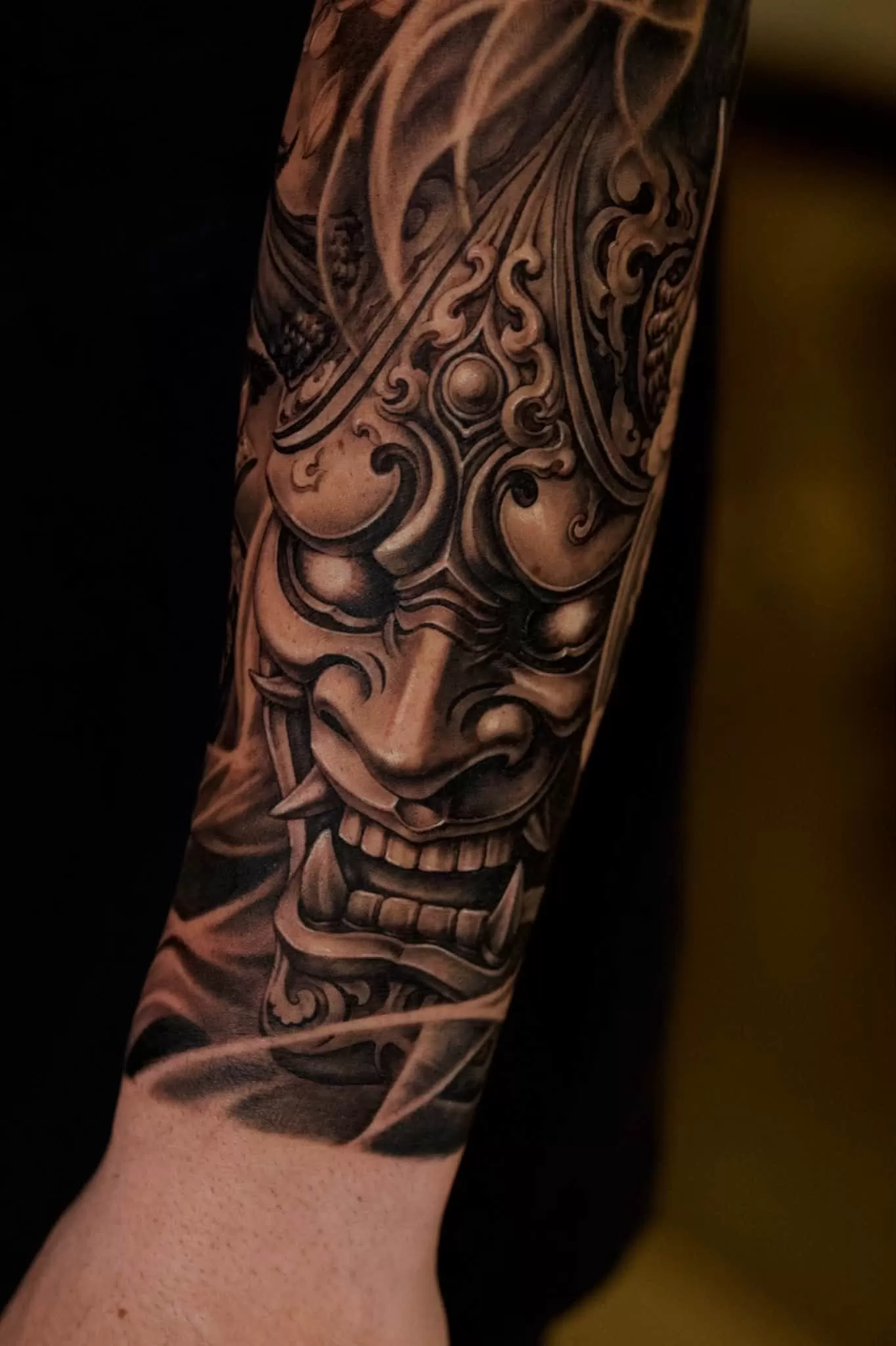
Engraved metal, weathered stone, ornamental patterns and layered fabrics can introduce extraordinary complexity. These subjects work particularly well when fine details support a strong overall silhouette.
Nature and Botanical Subjects
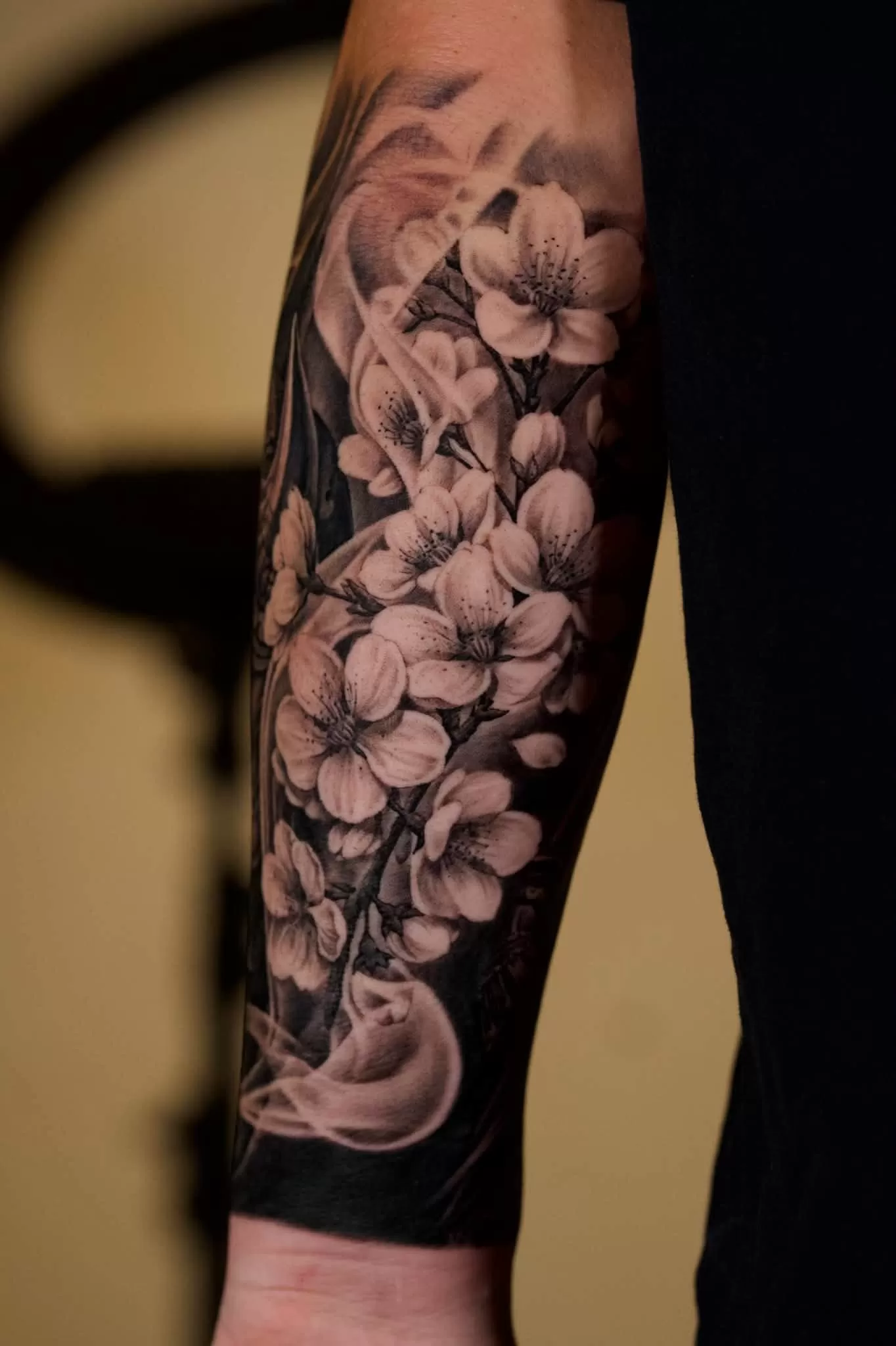
Petals, leaves, veins and organic textures offer a different kind of precision. Rather than relying on hard edges, these designs often depend on delicate transitions and carefully controlled shading.
Symbolic and Narrative Compositions
Sometimes the most meaningful details are not the largest elements in a tattoo. A small object, a subtle expression or a carefully rendered background feature can carry personal significance and connect the different parts of a larger story.
The best subject is ultimately one that allows detail to serve the meaning of the tattoo, rather than becoming an end in itself.
6. Finding an Artist Who Understands Detail
If you appreciate highly detailed tattoos, choosing an artist requires more than finding an impressive photograph on social media.
Look closely at the work.
Can you distinguish individual textures, or do they merge into one another? Are the shadows smooth without losing definition? Does the composition remain clear when viewed from a distance?
Most importantly, look for healed tattoos whenever possible.
Fresh work can demonstrate an artist's ability to create a striking immediate result. Healed work offers a better understanding of how their shading, contrast and fine details settle into the skin.
It is also worth discussing the size and placement of your design before committing to it. A composition that works beautifully on a large forearm or upper arm may need adjustments to fit a smaller area.
A good realism artist will not simply reproduce every detail in your reference image. They will help determine which details deserve to stay, which need to be adapted and how the entire design can work as a tattoo.
At Silver Ant Tattoo in Hanoi, we approach realism with an emphasis on both artistic precision and long-term readability. Our goal is to create work that rewards close inspection without losing its impact as a complete composition.
The Beauty Is in the Details
Black & Grey Realism appeals to people who notice things others might overlook.
It is for those who appreciate the complexity of a human expression, the texture of an animal's fur, the craftsmanship of an ancient object or the way a small shift in light can transform an entire image.
But the finest realism tattoos are not simply collections of intricate details.
They are carefully constructed compositions in which every shadow, texture and highlight has a purpose.
Because ultimately, great detail is not about how much you can see. It is about how much the artist can make you feel through what you see.
If you are planning a detailed Black & Grey Realism tattoo, explore the work of our artists at Silver Ant Tattoo and get in touch to discuss your idea.
Silver Ant Tattoo — Hanoi, Vietnam
Thoughtful design. Meticulous execution. Details that matter, even after the tattoo heals.
Frequently Asked Questions
What is Black & Grey Realism tattooing?
Black & Grey Realism uses black ink and different shades of grey to recreate realistic subjects through light, shadow, texture and depth. Subjects can include portraits, animals, architecture and complex symbolic compositions.
Is Black & Grey Realism suitable for small, detailed tattoos?
Yes, depending on the subject and design. However, very small tattoos have limited space for intricate features. An artist may recommend simplifying certain elements or increasing the size to help preserve clarity.
Do detailed realism tattoos lose their details over time?
Some fine details and lighter shades may become less distinct as a tattoo ages. Good design, appropriate sizing, well-planned contrast, proper aftercare and sun protection can help maintain its readability.
How can I tell whether a realism tattoo artist is skilled?
Look for consistent work across multiple projects, smooth tonal transitions, convincing textures and strong compositions. Whenever possible, review healed tattoos rather than relying exclusively on freshly completed work.
Where can I get a Black & Grey Realism tattoo in Hanoi?
Silver Ant Tattoo welcomes clients looking for detailed, carefully planned realism tattoos in Hanoi, Vietnam. Share your reference images, preferred placement and approximate size so the team can help you explore the right approach for your design.